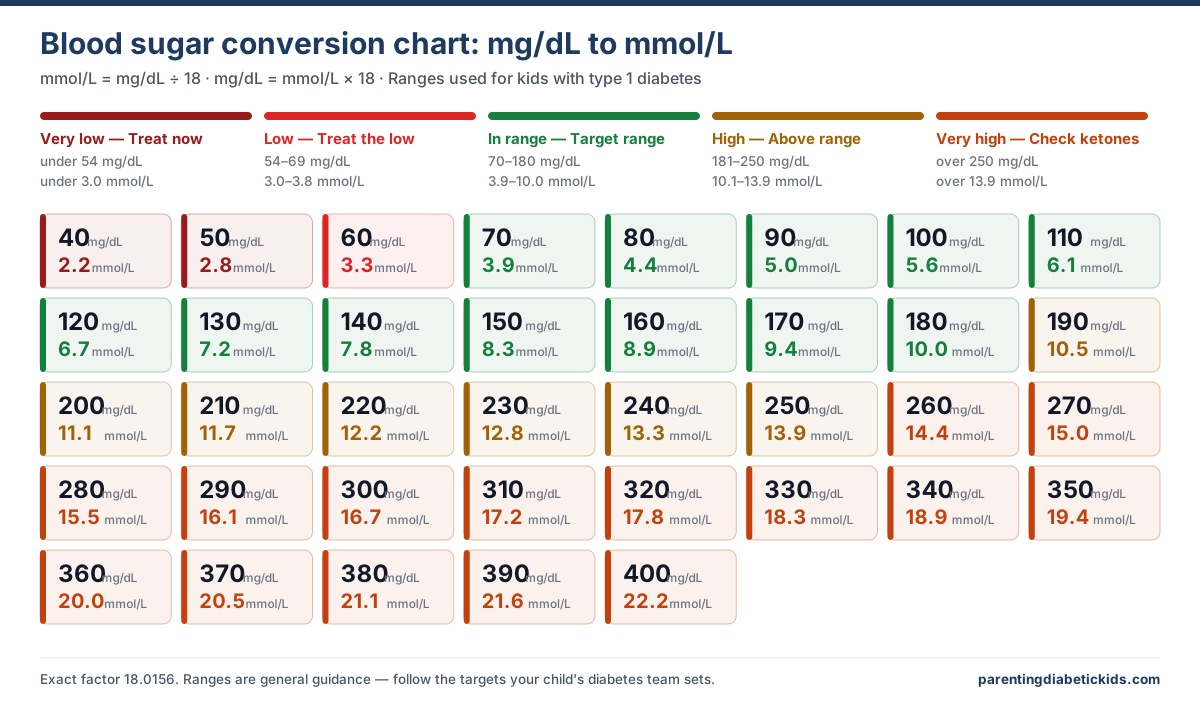
Convert blood glucose readings between mg/dL (used in the US) and mmol/L (used in the UK, Canada, Europe and Australia) — and see which range each number falls in for a child with type 1 diabetes.
Converter
⇄
In range
Inside the 70–180 mg/dL (3.9–10.0 mmol/L) target range used for children with type 1 diabetes.
Formula: mmol/L = mg/dL ÷ 18 · mg/dL = mmol/L × 18.
The exact factor for glucose is 18.0156, which is what this converter uses — so 100 mg/dL ÷ 18 = 5.6 mmol/L and 7 mmol/L × 18 = 126 mg/dL.
Medical disclaimer: Ranges shown are general guidance. Your child's diabetes care team sets their individual targets and treatment plan.
Common Blood Sugar Conversions
What is 70 mg/dL in mmol/L?
70 mg/dL is 3.9 mmol/L. This is the low threshold: below 70 mg/dL (3.9 mmol/L) counts as a low for a child with type 1 diabetes — treat with fast-acting carbs and recheck in 15 minutes.
What is 80 mg/dL in mmol/L?
80 mg/dL is 4.4 mmol/L. Inside the 70–180 mg/dL target range, though many families still give a small snack at bedtime or before sport at this level — follow your team's plan.
What is 100 mg/dL in mmol/L?
100 mg/dL is 5.6 mmol/L. Comfortably in range. In a child without diabetes, 100 mg/dL is the upper end of a normal fasting blood sugar.
What is 110 mg/dL in mmol/L?
110 mg/dL is 6.1 mmol/L. In range for a child with type 1 diabetes.
What is 250 mg/dL in mmol/L?
250 mg/dL is 13.9 mmol/L. Above 250 mg/dL (13.9 mmol/L) is the point to check ketones. See the ketone levels chart.
What is 1.5 mmol/L in mg/dL?
1.5 mmol/L of glucose is 27 mg/dL — a severe low that needs emergency treatment. If 1.5 mmol/L is a blood ketone reading rather than blood sugar, it is a different measurement and cannot be converted with this formula: 1.5 mmol/L of ketones is at the high, DKA-risk level. What ketone readings mean.
What is 2 mmol/L in mg/dL?
2 mmol/L is 36 mg/dL. A very low (level 2) reading — treat immediately and follow your low plan, including glucagon if your child cannot safely eat or drink.
What is 6 mmol/L in mg/dL?
6 mmol/L (6.0) is 108 mg/dL. In range.
What is 11 mmol/L in mg/dL?
11 mmol/L is 198 mg/dL. Above the 10 mmol/L (180 mg/dL) target range — follow your correction plan.
Every reading from 40 to 400 mg/dL in steps of 10, color-coded by range. Tap the chart to open a printable full-size version.
40 mg/dL= 2.2 mmol/L
50 mg/dL= 2.8 mmol/L
60 mg/dL= 3.3 mmol/L
70 mg/dL= 3.9 mmol/L
80 mg/dL= 4.4 mmol/L
90 mg/dL= 5.0 mmol/L
100 mg/dL= 5.6 mmol/L
110 mg/dL= 6.1 mmol/L
120 mg/dL= 6.7 mmol/L
130 mg/dL= 7.2 mmol/L
140 mg/dL= 7.8 mmol/L
150 mg/dL= 8.3 mmol/L
160 mg/dL= 8.9 mmol/L
170 mg/dL= 9.4 mmol/L
180 mg/dL= 10.0 mmol/L
190 mg/dL= 10.5 mmol/L
200 mg/dL= 11.1 mmol/L
210 mg/dL= 11.7 mmol/L
220 mg/dL= 12.2 mmol/L
230 mg/dL= 12.8 mmol/L
240 mg/dL= 13.3 mmol/L
250 mg/dL= 13.9 mmol/L
260 mg/dL= 14.4 mmol/L
270 mg/dL= 15.0 mmol/L
280 mg/dL= 15.5 mmol/L
290 mg/dL= 16.1 mmol/L
300 mg/dL= 16.7 mmol/L
310 mg/dL= 17.2 mmol/L
320 mg/dL= 17.8 mmol/L
330 mg/dL= 18.3 mmol/L
340 mg/dL= 18.9 mmol/L
350 mg/dL= 19.4 mmol/L
360 mg/dL= 20.0 mmol/L
370 mg/dL= 20.5 mmol/L
380 mg/dL= 21.1 mmol/L
390 mg/dL= 21.6 mmol/L
400 mg/dL= 22.2 mmol/L
mmol/L to mg/dL Chart (1–33.3 mmol/L)
Most meters and CGMs show readings up to 33.3 mmol/L (600 mg/dL) before displaying "HI".
1.0 mmol/L= 18 mg/dL
1.5 mmol/L= 27 mg/dL
2.0 mmol/L= 36 mg/dL
2.5 mmol/L= 45 mg/dL
3.0 mmol/L= 54 mg/dL
3.5 mmol/L= 63 mg/dL
4.0 mmol/L= 72 mg/dL
4.5 mmol/L= 81 mg/dL
5.0 mmol/L= 90 mg/dL
5.5 mmol/L= 99 mg/dL
6.0 mmol/L= 108 mg/dL
6.5 mmol/L= 117 mg/dL
7.0 mmol/L= 126 mg/dL
7.5 mmol/L= 135 mg/dL
8.0 mmol/L= 144 mg/dL
8.5 mmol/L= 153 mg/dL
9.0 mmol/L= 162 mg/dL
9.5 mmol/L= 171 mg/dL
10.0 mmol/L= 180 mg/dL
10.5 mmol/L= 189 mg/dL
11.0 mmol/L= 198 mg/dL
11.5 mmol/L= 207 mg/dL
12.0 mmol/L= 216 mg/dL
12.5 mmol/L= 225 mg/dL
13.0 mmol/L= 234 mg/dL
13.5 mmol/L= 243 mg/dL
14.0 mmol/L= 252 mg/dL
14.5 mmol/L= 261 mg/dL
15.0 mmol/L= 270 mg/dL
15.5 mmol/L= 279 mg/dL
16.0 mmol/L= 288 mg/dL
16.5 mmol/L= 297 mg/dL
17.0 mmol/L= 306 mg/dL
17.5 mmol/L= 315 mg/dL
18.0 mmol/L= 324 mg/dL
18.5 mmol/L= 333 mg/dL
19.0 mmol/L= 342 mg/dL
19.5 mmol/L= 351 mg/dL
20.0 mmol/L= 360 mg/dL
20.5 mmol/L= 369 mg/dL
21.0 mmol/L= 378 mg/dL
21.5 mmol/L= 387 mg/dL
22.0 mmol/L= 396 mg/dL
22.5 mmol/L= 405 mg/dL
23.0 mmol/L= 414 mg/dL
23.5 mmol/L= 423 mg/dL
24.0 mmol/L= 432 mg/dL
24.5 mmol/L= 441 mg/dL
25.0 mmol/L= 450 mg/dL
25.5 mmol/L= 459 mg/dL
26.0 mmol/L= 468 mg/dL
26.5 mmol/L= 477 mg/dL
27.0 mmol/L= 486 mg/dL
27.5 mmol/L= 495 mg/dL
28.0 mmol/L= 504 mg/dL
28.5 mmol/L= 513 mg/dL
29.0 mmol/L= 522 mg/dL
29.5 mmol/L= 531 mg/dL
30.0 mmol/L= 540 mg/dL
33.3 mmol/L= 600 mg/dL
Blood Sugar Ranges for Kids in mg/dL and mmol/L
These are the ranges CGM reports use for children with type 1 diabetes, from the International Consensus on Time in Range. The goal for most children is to spend more than 70% of the day between 70 and 180 mg/dL (3.9–10.0 mmol/L), less than 4% below 70, and less than 1% below 54.
Range
mg/dL
mmol/L
What it means
Very low
Below 54
Below 3.0
Level 2 hypoglycemia — treat immediately with fast-acting sugar and follow your low plan.
Low
54–69
3.0–3.8
Below the 70 mg/dL (3.9 mmol/L) low threshold — treat with fast-acting carbs and recheck in 15 minutes.
In range
70–180
3.9–10.0
Inside the 70–180 mg/dL (3.9–10.0 mmol/L) target range used for children with type 1 diabetes.
High
181–250
10.1–13.9
Above range — follow your correction plan and recheck.
Very high
Above 250
Above 13.9
Above 250 mg/dL (13.9 mmol/L) — check ketones and follow your sick-day / high plan.
For comparison, in children and toddlers without diabetes, a normal fasting blood sugar is roughly 70–100 mg/dL (3.9–5.6 mmol/L), and readings after meals usually stay below 140 mg/dL (7.8 mmol/L). If a child without diabetes has a low reading, see our guide to low blood sugar in kids without diabetes.
A1C to Estimated Average Glucose (mg/dL and mmol/L)
An A1C result reflects average blood sugar over roughly the past three months. This table converts A1C to estimated average glucose (eAG) in both units using the ADAG study formula. Read more in our guide to understanding your child's A1C.
A1C
Average glucose (mg/dL)
Average glucose (mmol/L)
5.0%
97
5.4
5.5%
111
6.2
6.0%
126
7.0
6.5%
140
7.8
7.0%
154
8.6
7.5%
169
9.4
8.0%
183
10.2
8.5%
197
11.0
9.0%
212
11.8
9.5%
226
12.6
10.0%
240
13.4
10.5%
255
14.1
11.0%
269
14.9
11.5%
283
15.7
12.0%
298
16.5
Why Are There Two Units?
The US, and a few other countries, report blood glucose as a weight per volume (milligrams per deciliter); most of the rest of the world uses a molar unit (millimoles per liter). The number differs, but the blood sugar is the same. It matters most when you travel with your child, read research or guidelines from another country, or use a meter bought abroad — most meters are locked to one unit, so check the display before you treat a reading.
Blood ketone readings are also shown in mmol/L but measure a different substance, so they cannot be converted with the glucose factor. See the ketone levels chart for what ketone numbers mean.